

Type one diabetes mellitus (T1DM) is an autoimmune disease that causes destruction of islet ß-cells, a special cell type in the pancreas that makes insulin. Insulin is necessary in order to shuttle glucose energy into body tissues.
There is no known cure for T1DM, but the aim of treatment should be to tightly control blood glucose. Most treatment plans used for T1DM patients unfortunately give way to volatile blood sugar numbers with wide variability, which is to say spiking and crashing of the blood sugar, which can be uncomfortable at best and deadly at worst.

With a dietary approach using very low carbohydrate intake (less than 50 grams per day), from vegetables primarily, and a moderate amount of whole food animal based protein, and higher healthy fat intake, a patient with T1DM can use less insulin, and tightly control their glucose, leveling it out and giving them freedom in life. Very low carbohydrate diets (VLCD) were the standard of care for both T1DM and type two diabetes mellitus (T2DM) until the 1920s when insulin was able to be synthesized and administered to patients.
People who begin a VLCD soon after T1DM diagnosis can expect better short and long term health outcomes according to emerging literature. These include lower incidence of losing eyesight from diabetic retinopathy, lower incidence of losing limb function from diabetic neuropathy, less likelihood of severe blood sugar crashes that cause loss of consciousness, coma, or death, as well as a reduction in triglycerides and elevation of HDL, both of which are seen in relation to excellent cardiovascular health.
While LDL particle number rises with a high fat VLCD, the size and buoyancy of LDL also increases, which is indicative of healthy LDL particles, and not directly causal of cardiovascular disease. Without digressing into further discussion on LDL, there are many more benefits than risks to a high number of large particle LDL, with a large body of emerging evidence to support that assertion.
With these things in mind, patient choice, in any state of health, is of prime importance, given the patient has the information they need to make the best choices for themselves. Patients need not only the information, but the space and time to process said information. This fact is especially true with a diagnosis like T1DM, due to the life-altering and confusing nature of the diagnosis, whether in childhood, with their parents making medical decisions, or in adulthood, when the diagnosis comes as a personal blow to them. For some patients, they may have already been on a journey to optimal health, thinking things were going well, and this diagnosis coming so quickly, can make them feel derailed or that their efforts were for naught.
Due to the difficulty of a T1DM diagnosis, provider support is incredibly pertinent. Patient survival depends on the compassion, knowledge, and pragmatism of the provider. If a provider unfamiliar with this nutritional approach is unwilling to sway from the standard pharmaceutical model of higher carbohydrate diet and higher insulin dosing, it can make the patient feel relegated to take on this position, dissuading any alternative. This type of problem happens with many types of therapies in the western model, to the detriment of patient outcomes over time and increased burden on the healthcare system. This system is far more equipped to handle acute problems than chronic diseases.
Many unnecessary dilemmas arise partly due to myths or mistakes associated with very low carbohydrate diets.
There are a number of older papers with improperly applied VLCDs, some not actually below 50 g of carbohydrates, or some with a poor nutritional profile created by processed foods or meal replacements. Another myth already mentioned regards an isolated high LDL reading being a major risk factor in cardiovascular disease.
Some valid concerns include the threat of ketoacidosis, but ketoacidosis happens more often with high carbohydrate diets, although it is sometimes seen with euglycemia (normal blood glucose), where ketone levels increase above a safe threshold. Keeping an eye on blood ketone levels can be very helpful in preventing this problem, and euglycemic ketoacidosis is not very common.
Another concern is for patients over-dosing insulin causing hypoglycemia. The simple answer is to reduce the amount of short acting insulin, enough to account for the protein intake, but not to dose insulin based on carbohydrates left on the table; that’s just silly.
Finally, there is a concern that adherence to this diet would be poor because it is restrictive and socially abnormal, but as with any diet and lifestyle change, once the patient’s quality of life is improved, adherence becomes second nature.
So, how does one embark safely on a VLCD for T1DM? Most importantly, knowing that insulin dose depends on carbohydrate and protein intake is the primary factor. Fewer carbohydrates means less insulin.
Basal insulin, usually of 10 IU per night, can and should remain a constant to maintain life. We adjust meals to be low in carbohydrate and we treat protein with insulin as well. The general rule is that 10 grams of protein is equivalent to roughly 6 grams of slow acting carbohydrates, or 60% of what carbohydrates would need, insulin wise. Providers can help with determining what this structure will all look like for a patient, based on their needs and wishes.
For strenuous exercise, it is important for patients to consume a slow acting carbohydrate following a workout, which will help prevent the blood sugar crash associated with adrenaline output, aka post-exercise hypoglycemia. Proteins like peanut butter or super-starches like UCAN may be consumed. Whole food sources are preferable for a healthier general approach to nutrition, but the approach depends on the patient’s informed decision making process with their provider.
Much of this insulin-dosing dance can be tricky to determine at the start of treatment following diagnosis, depending also on how much of the patient’s pancreatic function remains. As an aside, with any anti-inflammatory diet, autoimmune disease progression is vastly reduced, which begs the question, can a VLCD with tight blood glucose control spare the remaining pancreatic function or even repair it to a degree? More research is needed to determine this, but the idea of reversing disease is always an exciting thought.
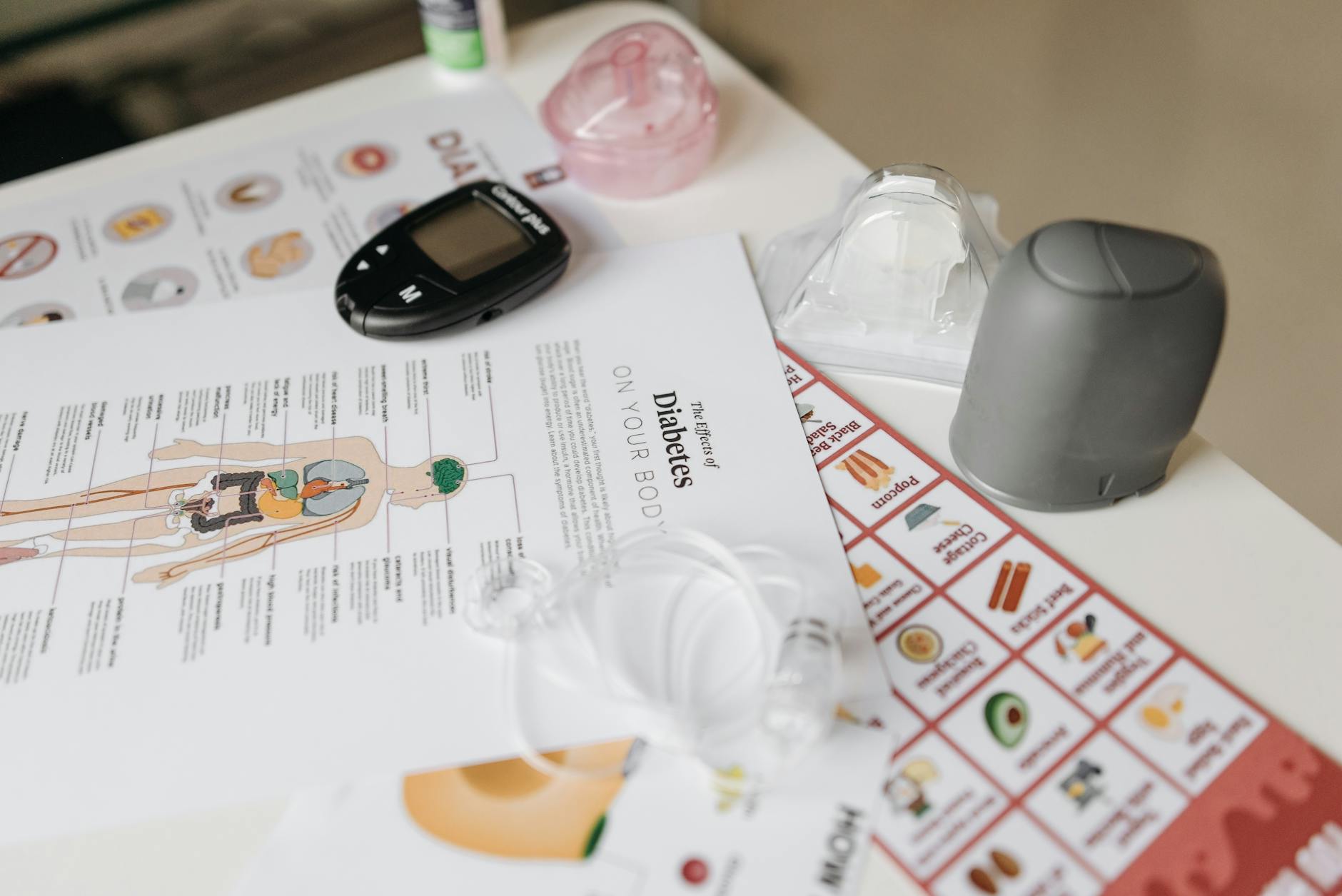
All dreaming aside, ways to improve safety, self-discovery, and compliance come with continuous glucose monitoring (CGM) to see how different foods and activities affect blood glucose actively without repetitive finger sticking. Dexcom is a commonly used CGM. If CGM isn’t preferred by the patient, but they’re willing to do the finger-sticking routine, using a glucose and ketone monitor can be very helpful. Two good glucometers that also measure ketones are the Precision Xtra and the Keto-Mojo. Another consideration to increase safety, is an insulin pump that delivers predictive or “smart” insulin administration, which further helps to take out the guesswork in dosing insulin and prevents blood sugar spiking and crashing. Using a combination of ketone and glucose monitoring with appropriate insulin delivery helps prevent euglycemic ketoacidosis as well.
Compliance and diligence is important for the patient to make progress, but the patient needs to know that as they keep a low carbohydrate intake, they will have a low tolerance to increases in carbohydrates. This intolerance can be a boon however, if the patient has a blood sugar crash and needs to ingest a sugar source to prevent complications. It also means that swapping back and forth from low carb to standard or high carb diets is a bad idea and can be dangerous.
No matter what treatment path a patient chooses, they need to be given compassion. Providers should teach patients to be kind to themselves, to listen to their bodies and minds, and to take their time, because this diagnosis is difficult. Providers and loved ones should encourage patients to find someone they can support and partner with as they learn and grow in acceptance of their unique state of health. Finding mentorship and community outreach is an excellent way for patients with T1DM to give back and be part of making this disease more livable and better understood by the larger community.

Pros of VLCD:
- Can help patients achieve and maintain non-diabetic ranges of HbA1c to around 5.7% in VLCD (below 50 g carb/day) and between 7 and 9% on average of low carb and VLCD, according to literature and clinical information.
- Anti-inflammatory diet may reduce autoimmune disease progression and thereby preserve pancreatic islet ß-cell function. This is not known by research but may be anecdotally demonstrated. This hypothesis needs further research.
- Helps prevent diabetic end organ damage caused by hyperglycemia to eyes, liver, kidneys, brain, extremities, and reproductive organs.
- Reduces the cost of treatment with insulin dramatically, from 70 to 90% reduction.
- Helps to maintain a healthy body fat percentage by reducing the necessity for insulin load and reduces muscle loss by increased protein intake.
- Reduces the risk of the many causes of mortality seen in diabetics.
Cons of VLCD (or any dietary/lifestyle change):
- Requires patients to put in effort of choosing high quality whole foods and cooking.
- May feel inconvenient or “boring” due to limitations in food choices to low carb foods.
- Social pressure from family or friends believing they know what is best for the patient.
- Pressure from larger western medical community who are not convinced by emerging data and want to do things using the status quo AMA standard of care and heavy reliance on pharmaceuticals.
References:
- Danne, T., Garg, S., Peters, A. L., Buse, J. B., Mathieu, C., Pettus, J. H., Alexander, C. M., Battelino, T., Ampudia-Blasco, F. J., Bode, B. W., Cariou, B., Close, K. L., Dandona, P., Dutta, S., Ferrannini, E., Fourlanos, S., Grunberger, G., Heller, S. R., Henry, R. R., Kurian, M. J., … Phillip, M. (2019). International Consensus on Risk Management of Diabetic Ketoacidosis in Patients With Type 1 Diabetes Treated With Sodium-Glucose Cotransporter (SGLT) Inhibitors. Diabetes care, 42(6), 1147–1154. https://doi.org/10.2337/dc18-2316
- Lennerz, B. S., Barton, A., Bernstein, R. K., Dikeman, R. D., Diulus, C., Hallberg, S., Rhodes, E. T., Ebbeling, C. B., Westman, E. C., Yancy, W. S., Jr, & Ludwig, D. S. (2018). Management of Type 1 Diabetes With a Very Low-Carbohydrate Diet. Pediatrics, 141(6), e20173349. https://doi.org/10.1542/peds.2017-3349
- Turton, J. L., Raab, R., & Rooney, K. B. (2018). Low-carbohydrate diets for type 1 diabetes mellitus: A systematic review. PloS one, 13(3), e0194987. https://doi.org/10.1371/journal.pone.0194987
- Bernstein, R. K. (2011). Dr. Bernsteins diabetes solution: A complete guide to achieving normal blood sugars. Little, Brown & Co.
- Lennerz, B. S., Koutnik, A. P., Azova, S., Wolfsdorf, J. I., & Ludwig, D. S. (2021). Carbohydrate restriction for diabetes: Rediscovering Centuries-Old wisdom. Journal of Clinical Investigation, 131(1). https://doi.org/10.1172/jci142246
- Norwitz, N. G., Winwood, R., Stubbs, B. J., D’Agostino, D. P., & Barnes, P. J. (2021). Case report: Ketogenic diet is associated with improvements in chronic obstructive pulmonary disease. Frontiers in Medicine, 8. https://doi.org/10.3389/fmed.2021.699427
- Gale, E. A. M. (2001). The discovery of type 1 diabetes. Diabetes, 50(2), 217–226. https://doi.org/10.2337/diabetes.50.2.217
- Jennifer L. Sherr, Claire T. Boyle, Kellee M. Miller, Roy W. Beck, William V. Tamborlane; for the T1D Exchange Clinic Network, No Summer Vacation From Diabetes: Glycemic Control in Pediatric Participants in the T1D Exchange Registry Based on Time of Year. Diabetes Care 1 December 2016; 39 (12): e214–e215. https://doi.org/10.2337/dc16-1522
- Klein R, Klein BEK, Moss SE, Davis MD, DeMets DL. The Wisconsin Epidemiologic Study of Diabetic Retinopathy: II. Prevalence and Risk of Diabetic Retinopathy When Age at Diagnosis Is Less Than 30 Years. Arch Ophthalmol. 1984;102(4):520–526. doi:10.1001/archopht.1984.01040030398010
- Nathan, D. M., & DCCT/EDIC Research Group (2014). The diabetes control and complications trial/epidemiology of diabetes interventions and complications study at 30 years: overview. Diabetes care, 37(1), 9–16. https://doi.org/10.2337/dc13-2112
- Turner R. C. (1998). The U.K. Prospective Diabetes Study. A review. Diabetes care, 21 Suppl 3, C35–C38. https://doi.org/10.2337/diacare.21.3.c35
- Judith C. Kuenen, Rikke Borg, Dirk J. Kuik, Hui Zheng, David Schoenfeld, Michaela Diamant, David M. Nathan, Robert J. Heine, on behalf of the ADAG Study Group; Does Glucose Variability Influence the Relationship Between Mean Plasma Glucose and HbA1c Levels in Type 1 and Type 2 Diabetic Patients?. Diabetes Care 1 August 2011; 34 (8): 1843–1847. https://doi.org/10.2337/dc10-2217
- Karges B, Schwandt A, Heidtmann B, et al. Association of Insulin Pump Therapy vs Insulin Injection Therapy With Severe Hypoglycemia, Ketoacidosis, and Glycemic Control Among Children, Adolescents, and Young Adults With Type 1 Diabetes. JAMA. 2017;318(14):1358–1366. doi:10.1001/jama.2017.13994
- Rawshani, A., Sattar, N., Franzén, S., Rawshani, A., Hattersley, A. T., Svensson, A.-M., Eliasson, B., & Gudbjörnsdottir, S. (2018). Excess mortality and cardiovascular disease in young adults with type 1 diabetes in relation to age at onset: A nationwide, Register-based Cohort Study. The Lancet, 392(10146), 477–486. https://doi.org/10.1016/s0140-6736(18)31506-x
Resources:
- Dr. Bernstein’s book on Amazon: https://www.amazon.com/Dr-Bernsteins-Diabetes-Solution-Achieving/dp/0316182699
- Dr. Bernstein’s book (much of it free online: http://www.diabetes-book.com/read-online/
- Dr. Bernstein’s STARTER VIDEOS playlist specifically for newly diagnosed t1ds: https://www.youtube.com/playlist?list=PLs_TA02I6IvU8hlBhash0Ww3Nn3EkBYWd free YouTube channel, Diabetes University. There are 100s of videos on the channel.
- Bright Spots & Landmines: The Diabetes Guide I Wish Someone Had Handed Me by Adam Brown: https://www.amazon.com/Bright-Spots-Landmines-Diabetes-Someone/dp/0692875174
- Recipes: https://www.carolinesketokitchen.com/
- Let Me Be 83: https://letmebe83.org/
- ANDREW P. KOUTNIK, PH.D.: https://www.andrewkoutnik.com/
- Tandem Diabetes Care T:Slim X2 Insulin Pump: https://www.tandemdiabetes.com/products/insulin-pumps/t-slim-x2-insulin-pump
- TYPEONEGRIT Facebook Group:
- ABOUT: TypeOneGrit is a (not-so) small FB group of type ONE diabetics who have read, “Dr. Bernstein’s Diabetes Solution” and are CURRENTLY following his protocol which consists of a VERY low carb – no grains, no sugar, no starch, and no fruit, to normalize blood sugars. [TypeOneGrit] believes in normal blood sugars. If this is new to you, READ THE BOOK ‘Diabetes Solution’ by Dr. Bernstein.
- [TypeOneGrit] believes that type 1 children (as well as adults) are entitled to the same normal blood sugars as non-diabetics. [TypeOneGrit] are followers of Dr. Bernstein and highly recommend reading his book, “Dr. Bernstein’s Diabetes Solution”. The group is based on that book.
- [TypeOneGrit] follows Dr. Bernstein’s guide to normal blood sugars. [TypeOneGrit] are a group to discuss and promote his ideals, which are clearly spelled out in his book.
- [TypeOneGrit] is NOT a support group. It is an educational group for normalizing bg. Please do not make posts about off-plan foods or make cheat posts. Please see the other rules [in the facebook group].
RESOURCES FROM TYPEONEGRIT FACEBOOK GROUP: IF THIS IS NEW TO YOU:
- Dr. Bernstein’s book on Amazon: https://www.amazon.com/Dr-Bernsteins-Diabetes-Solution-Achieving/dp/0316182699 Dr. Bernstein’s book (much of it free online: http://www.diabetes-book.com/read-online/
- Dr. Bernstein’s STARTER VIDEOS playlist specifically for newly diagnosed t1ds: https://www.youtube.com/playlist?list=PLs_TA02I6IvU8hlBhash0Ww3Nn3EkBYWd free YouTube channel, Diabetes University. There are 100s of videos on the channel.
- TYPEONEGRIT has a facebook community page: https://www.facebook.com/Type1Grit/
- And a pinterest page: https://www.pinterest.com/typeonegrit
- If you are CURIOUS about the group and the experience of group members – what they eat and their A1cs, etc., there is this video which also thoroughly discusses the complications of diabetes and how to normalize blood sugars. https://www.dietdoctor.com/member/presentations/dikeman
- Check out our Pinterest page! http://www.pinterest.com/typeonegrit
*****Note: [TypeOneGrit] are not medical professionals. Please see your doctor for specific medical advice. [TypeOneGrit] is not advising that you disregard your doctor’s advice. [TypeOneGrit] are only relating their personal experiences.*****
Disclaimer: The information provided in this post is for general informational purposes only and should not be construed as medical advice or a substitute for professional medical diagnosis, treatment, or advice. If you believe you or a loved one may have diabetes or any other medical condition, it is crucial to seek the guidance of a qualified healthcare professional. Please consult with a doctor or visit an emergency center as appropriate for proper evaluation, diagnosis, and treatment. Your health and well-being are paramount, and nothing in this post should delay or replace seeking medical care from a licensed healthcare provider.
The views expressed in this post are those of the author and do not necessarily reflect the views or opinions of Nutura Clinic, Ohio Naturopathic, or Suzelis Health. The information provided herein is for general informational purposes only and should not be considered as endorsed or verified by any specific healthcare institution or professional entity. It is essential to consult with a qualified healthcare provider for personalized medical advice and treatment. If you suspect you or a loved one may have diabetes or any other medical condition, please seek professional medical care promptly.
 Rachael O'Connell, ND • The Warrior Doc